
Reupholstering boat seat is one of the most effective ways to refresh the look and comfort of any vessel. Over time, sun, salt, and moisture slowly destroy even the strongest materials. Many boat owners choose to restore their seating instead of replacing the entire interior, and for expert results you can turn to experienced professionals here. This simple upgrade can completely change how your boat looks and feels.
Why Boat Seats Wear Out Faster Than You Expect
Marine environments are harsh. Constant exposure to sunlight leads to fading and cracking. Moisture causes foam to break down from the inside. Salt speeds up material aging and weakens stitching.
Even well-maintained boats experience interior wear. Seating is under constant pressure from movement, vibration, and temperature changes. Over time, comfort decreases and the surface loses its original appearance.
What Reupholstering Boat Seat Really Means
Reupholstering is more than just replacing fabric. It involves removing old covers, inspecting the internal foam, and rebuilding the seat with new materials. In many cases, the foam is reshaped or fully replaced to restore proper support.
This process allows you to customize every detail. You can change texture, color, firmness, and even the shape of your seating. The result feels like a brand-new interior without the cost of full replacement.
Key Benefits of Reupholstering Instead of Replacing
Boat owners often choose reupholstery because it offers clear advantages:
- Lower cost compared to full seat replacement
- Custom fit for unique boat layouts
- Improved comfort and support
- Fresh modern appearance
- Stronger resistance to sun and moisture
A properly restored seat can last just as long as a factory-made one when high-quality materials are used.
Materials Used in Modern Marine Upholstery
Choosing the right materials defines how long the result will last. Professional upholsterers rely on marine-grade components that are designed to survive extreme conditions.
Common materials include:
- UV-resistant vinyl
- Solution-dyed acrylic fabrics
- Closed-cell and high-density foam
- Mold and mildew resistant threads
These materials are built specifically for marine use and perform much better than automotive upholstery products in wet environments.
The Step by Step Reupholstery Process
Every project follows a structured sequence to ensure consistent quality.
First, the old covers are carefully removed. Then the foam is inspected for water damage, compression, or decay. If the foam is compromised, it is replaced or rebuilt in layers.
Next, new fabric is cut to match original dimensions. All seams are reinforced to handle vibration and movement. Finally, the finished cover is installed tightly to prevent wrinkles and shifting.
This process ensures long-term durability and a clean professional appearance.
How Reupholstering Affects Comfort on the Water
Comfort is not just about soft surfaces. Proper foam density supports posture and reduces fatigue during long trips. Old foam often collapses and creates pressure points.
After reupholstering boat seat, many boaters notice:
- Reduced lower back strain
- Better stability while seated
- Less vibration discomfort
- Improved relaxation during cruising
Comfort becomes especially important for fishing boats, pontoons, and cruising vessels where people remain seated for hours.
Custom Design Options for Boat Seating
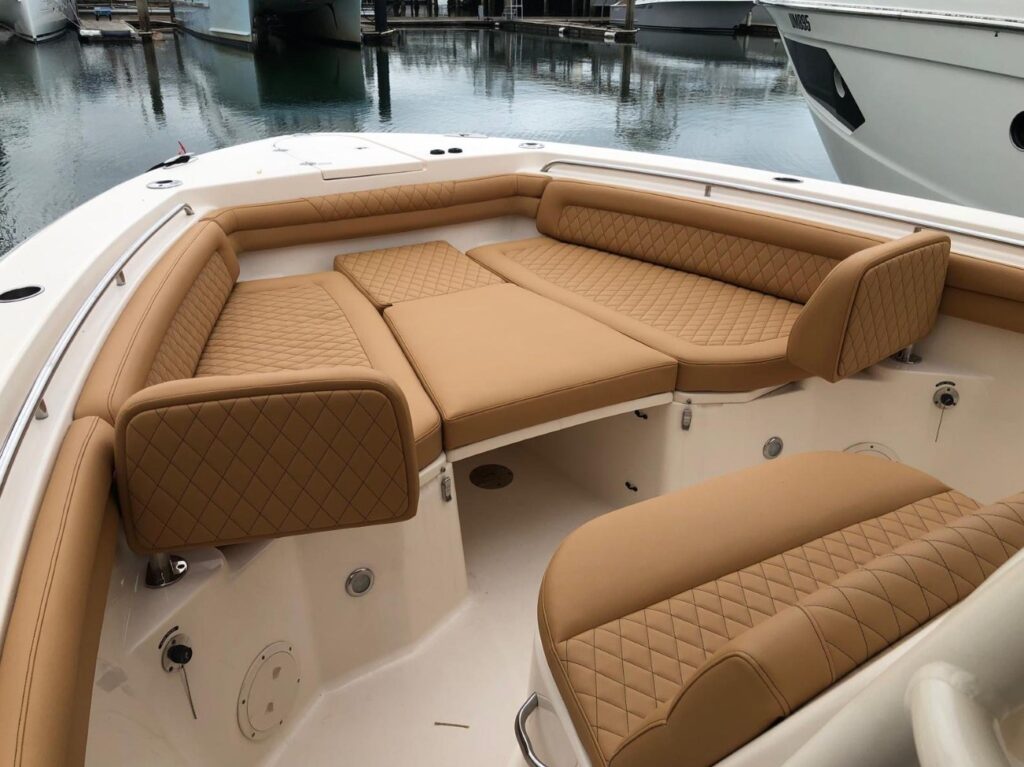
Reupholstery allows full freedom of design. You can select classic marine color schemes or modern bold styles. Some owners prefer neutral tones for elegance, while others choose high-contrast finishes for a sportier look.
Design choices include:
- Two-tone upholstery layouts
- Patterned stitching
- Textured vinyl surfaces
- Custom piping and seam placement
These elements give the interior a personalized character while maintaining functional durability.
Maintenance After Reupholstering
New upholstery remains beautiful only with proper care. Simple routines help extend its lifespan.
- Rinse seats after saltwater exposure
- Clean weekly with mild soap
- Avoid harsh chemicals
- Use breathable covers when stored
- Keep cushions dry during long idle periods
With proper maintenance, quality upholstery can maintain its appearance for many years.
When Is the Right Time to Reupholster
Many owners wait too long before restoring their seats. Early signs that indicate the need for reupholstering boat seat include surface cracking, faded color, waterlogged foam, and loosened seams.
If left unaddressed, internal foam damage can lead to structural seat failure. Early restoration prevents further deterioration and reduces repair costs.
Who Should Consider Professional Reupholstery
Reupholstery is ideal for:
- Boats used frequently in strong sun
- Vessels with aging interiors
- Charter boats with constant guest traffic
- Owners preparing their boat for resale
In real market conditions, updated seating often increases buyer interest and perceived value.
Conclusion
Reupholstering boat seat is one of the most practical investments a boat owner can make. It restores comfort, improves durability, and refreshes the entire appearance of the vessel. With modern materials and skilled craftsmanship, the result feels new while preserving the original structure. For anyone looking to extend the life of their boat interior and enhance every trip on the water, professional reupholstery remains a smart and effective solution.